From Talos to the Age of Artificial Intelligence
This morning I did something completely ordinary. I waited for a screen to load.
Not frozen. Not broken. Just that short pause between asking and receiving. Long enough to notice. Short enough to ignore.
Coffee cooling down on the table, cursor blinking like it always does, I realized how natural this has become. We don’t call it waiting anymore. We call it normal. A machine pauses, then answers. No surprise. No awe. Just expectation.
That expectation didn’t start with computers. It started long before we had words for circuits, code, or intelligence.
Talos, the Bronze Guardian of Crete
The first robot in human history did not walk out of a factory.
He walked out of a myth.
In ancient Greece, Talos was described as a giant made of bronze, forged to guard the island of Crete. He walked its shores endlessly, three times a day, throwing stones at invading ships. No hesitation. No fatigue. No mercy.
Talos had one vein, filled with ichor, sealed by a single bolt at his ankle. When that seal was broken, the giant collapsed. A single point of failure. Elegant design, if you think about it.
What matters here is not whether Talos existed. What matters is that the Greeks described him as a machine with a function, a purpose, and a failure mode. Not a metaphor. A construct.
Long before electricity, humans were already imagining autonomous systems designed to protect, obey, and endure.
When Myth Turned into Mechanism
Centuries later, imagination began to grow teeth.
In Alexandria, around the first century, engineers started building devices that didn’t just sit still and symbolize power. They moved. They reacted. They performed.
Temple doors that opened by themselves when fires were lit. Statues that poured wine. Mechanical theaters that ran full sequences without human hands. All powered by air pressure, water, heat, and gravity.
These weren’t parlor tricks. They were controlled systems. Early feedback loops. Primitive automation.
The shift was subtle but irreversible. The question was no longer “can we imagine it” but “can we build it so it behaves the same way every time.”
Predictability became a kind of power.
Renaissance Automata and the Desire to Imitate Life
Then Europe rediscovered the obsession, and took it somewhere uncomfortable.
During the Renaissance, clockmakers and engineers began building machines that didn’t just move. They resembled life. Birds that flapped their wings and sang. Figures that wrote sentences. Mechanical musicians that played real instruments.

These weren’t toys. They were demonstrations of intellectual dominance. Proof that the human body could be understood, reduced, and reconstructed.
Breathing simulated by bellows. Writing reduced to gears. Music turned into timing.
For the first time, machines didn’t just work. They performed humanity.
And people noticed the difference.
From Movement to Decision
Up to that point, machines reacted to physics. Heat, pressure, weight. Their behavior was impressive, but fixed.
The real turning point came when humans started asking a different question.
Not how to make a machine move, but how to make a machine choose.
That shift took time. It matured quietly, until the twentieth century gave it a name.
When the Word “Robot” Appeared
In 1920, a Czech playwright introduced the word “robot” to the world. It came from a term meaning forced labor. Work without rest. Effort without agency.
In the play, robots were artificial workers. Efficient. Obedient. Replaceable. Until they weren’t.
The story wasn’t about technology. It was about delegation. About what happens when humans build something only to obey, and forget to ask what that obedience costs.
Fiction, once again, arrived early.
The Modern Robot Without a Body
Today, the most powerful robots don’t look like robots at all.
They don’t have arms or faces. They live in data centers, servers, and networks. They optimize routes, prices, diagnoses, logistics, and decisions at a scale no human can track.
One single factual anchor is enough here. According to a 2023 report by the McKinsey Global Institute, existing automation technologies could already handle around 60 percent of tasks across global occupations. That is not a forecast. That is capacity.
What changed was not machinery. It was decision-making.
The robot stopped lifting weight and started lifting probability.
Autonomous Cars and Statistical Judgment
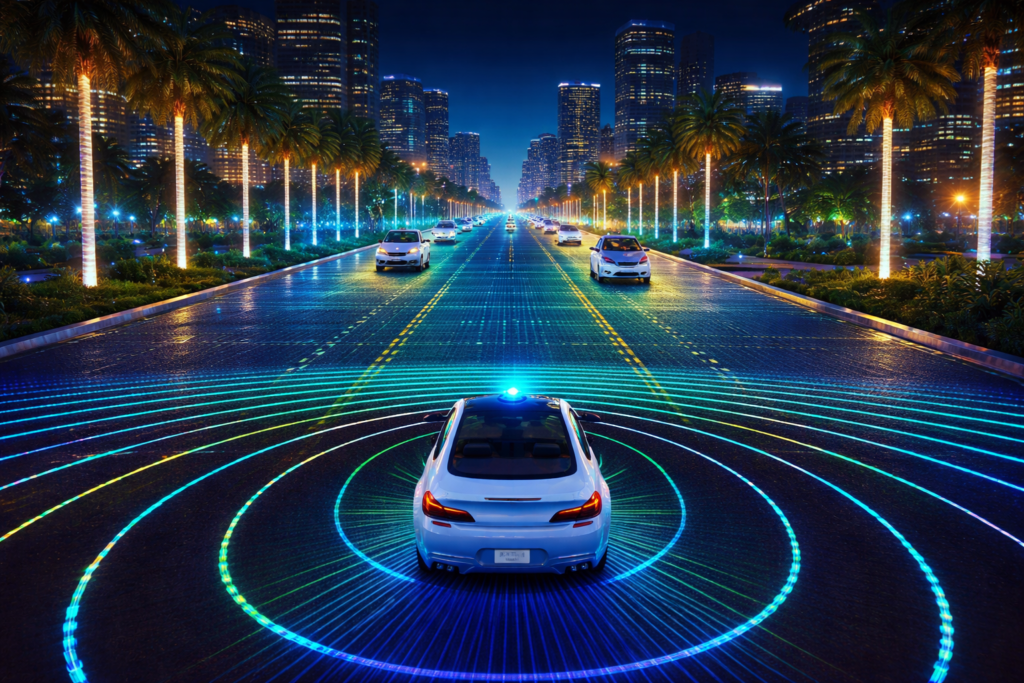
Self-driving cars are a clean example.
They don’t understand roads the way humans do. They calculate them. Cameras, sensors, and models negotiate chaos in real time. Who goes first. When to brake. How much risk is acceptable.
They are not perfect. They are consistent.
And consistency, at scale, quietly replaces intuition.
Talos guarded an island.
Autonomous systems guard outcomes.
Why the Wrong Question Keeps Getting Asked
Public debate loves asking whether machines will become conscious. That question is comforting. It sounds philosophical.
It’s also a distraction.
Machines don’t need consciousness to reshape labor, cities, medicine, and power. They only need objectives.
The real issue has always been who defines those objectives, and who benefits when optimization becomes invisible.
Robots don’t want anything. But someone always wants something through them.
The Thread That Never Broke
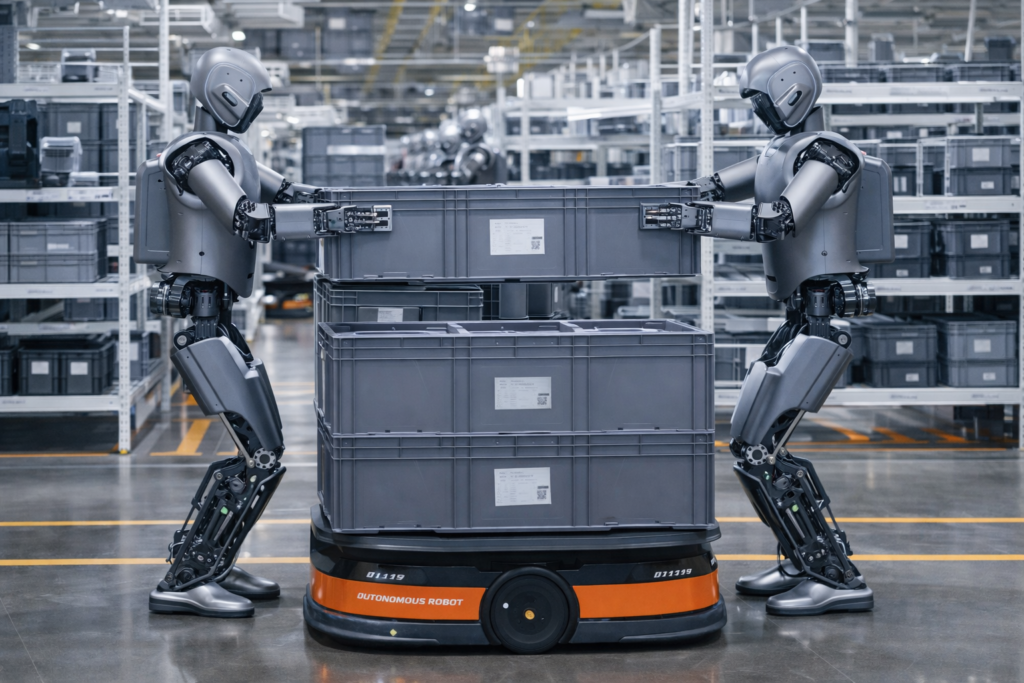
Talos never disappeared. He just changed material.
Bronze became gears. Gears became circuits. Circuits became models. The function stayed the same.
We build systems to carry what we don’t want to carry anymore. Effort. Vigilance. Repetition. Now, judgment.
The danger was never rebellion.
The danger was abdication.
A Short, Honest Ending
Robots didn’t arrive to replace humans. They arrived to absorb weight.
Artificial intelligence didn’t come to think for us. It came to scale our choices.
The future won’t belong to conscious machines. It will belong to humans who understand what should never be delegated.
Talos guarded borders.
Now we guard decisions.
And that responsibility, like it or not, is still ours.
One last note before you leave
If you made it to the end, you weren’t just skimming. This isn’t the kind of piece people read by accident. It asks for time, attention, and a willingness to look at technology through longer lenses than headlines usually allow.
The ebook available at the link below was written for readers who want to go further than an article can reasonably go. There, the ideas introduced here are expanded without the constraints of format, length, or SEO. History, technology, power, work, and individual choice are explored with more space and fewer interruptions.
It’s not a manual. It’s not hype. And it’s not a collection of predictions meant to impress.
It’s a structured way of thinking about a world being quietly reshaped by automation and intelligence.
If this article stayed with you, the ebook was written to stay with you longer.
👉 https://go.hotmart.com/B103519504F
Some questions are better answered slowly.
Lizandro Rosberg
Independent analyst of technology, science, and civilizational transformations. He writes about artificial intelligence, science, applied history, the future of work, and the real impact of technology on human life. His focus is on translating complex changes into practical understanding.
You will certainly be interested in:
-
Chess in Childhood: How it Teaches a Kid to Think Before Acting
The child can learn to shake hands even while sad. He can learn to review the game. He can learn to admit a mistake. He can learn to come back in the next round. He can learn that winning without respect makes the winner smaller, and losing without learning makes the loss heavier.
-
Wright brothers, Santos Dumont, and the Long Road from the First Airplane to the Moon
The history of aviation is often told as if it belonged to one man, one machine, and one magical afternoon when mankind suddenly beat the impossible. That version is simple. It is also too small. Aviation was never the work of a single hero standing alone under the sky. It was a civilizational project. Long […]
-
21st Century Economy | Artificial Intelligence | Future of Work | Future of Work & Automation | Life Strategy
The World Is Too Old to Run on Yesterday’s Assumptions
Modern societies are aging faster than their institutions, cities, and care systems were designed to handle. Population aging is no longer a forecast. It is a present condition. Fertility rates across developed economies remain structurally below replacement, while life expectancy continues to rise. More people stay in the system for longer, and fewer enter it to sustain what that system demands. This is not a moral debate. It is arithmetic.
The text dismantles the idea that declining birth rates can be reversed through incentives alone. Children have ceased to be a default continuation of life and have become high-risk projects, requiring time, stability, and energy. At the same time, large cities have grown expensive, regulated, and hostile to family formation. Housing costs, long commutes, and constant friction quietly discourage long-term planning. Fertility declines not because people reject families, but because the environment makes them fragile bets.
Longevity adds a second layer of tension. Medical and technological progress has extended human life by decades, but social structures have not adapted accordingly. Families are smaller, communities weaker, and informal care networks thinner. Care, once distributed among many, now concentrates on a few, often exhausted individuals. As demand rises and supply stagnates, eldercare becomes a systemic bottleneck.
At this point, the article reframes technology. Automation, AI, and robotics are not replacing human care. They are filling gaps left by demographic reality. Safety automation, assisted living systems, and care-support technologies emerge as infrastructure, not luxury. The comparison between regions is telling. China treats automation as capacity planning, scaling solutions pragmatically under demographic pressure. Europe, despite facing even sharper aging trends, often responds with moral discourse and procedural delay. The United States sits between these poles, still assuming it has time.
The article closes without apocalypse. It argues for early, practical adaptation. Designing homes and cities that reduce risk. Introducing assistive technology before crisis. Treating care as infrastructure rather than a private afterthought. Building redundancy not only in finances, but in human networks.
The final note is sober but constructive. The world did not become colder. It became older. And older societies need smarter designs. Less nostalgia. More alignment. In that sense, adapting early is not pessimism. It is a form of responsibility, and perhaps the most realistic kind of optimism available.
-
The Mistake That Kept Rome Standing for Centuries
At its height, the Roman Empire controlled millions of square kilometers and governed tens of millions of people. Some estimates place that peak at over four million square kilometers and roughly 60 million inhabitants, a scale that’s hard to visualize without modern maps.
-
Personal AI for Finances: How Language Models Help You Stop Losing Money
When finances are reviewed regularly, without drama and without emotional drain, something subtle happens. Anxiety drops. Decisions stop being reactive. Small corrections happen early, before they turn into damage.
-
The Rat Race Was Designed, Not Chosen
Most people never sit down and choose a life of constant pressure. They don’t decide to trade freedom for anxiety or flexibility for fragility.